About the Journal

Journal Description

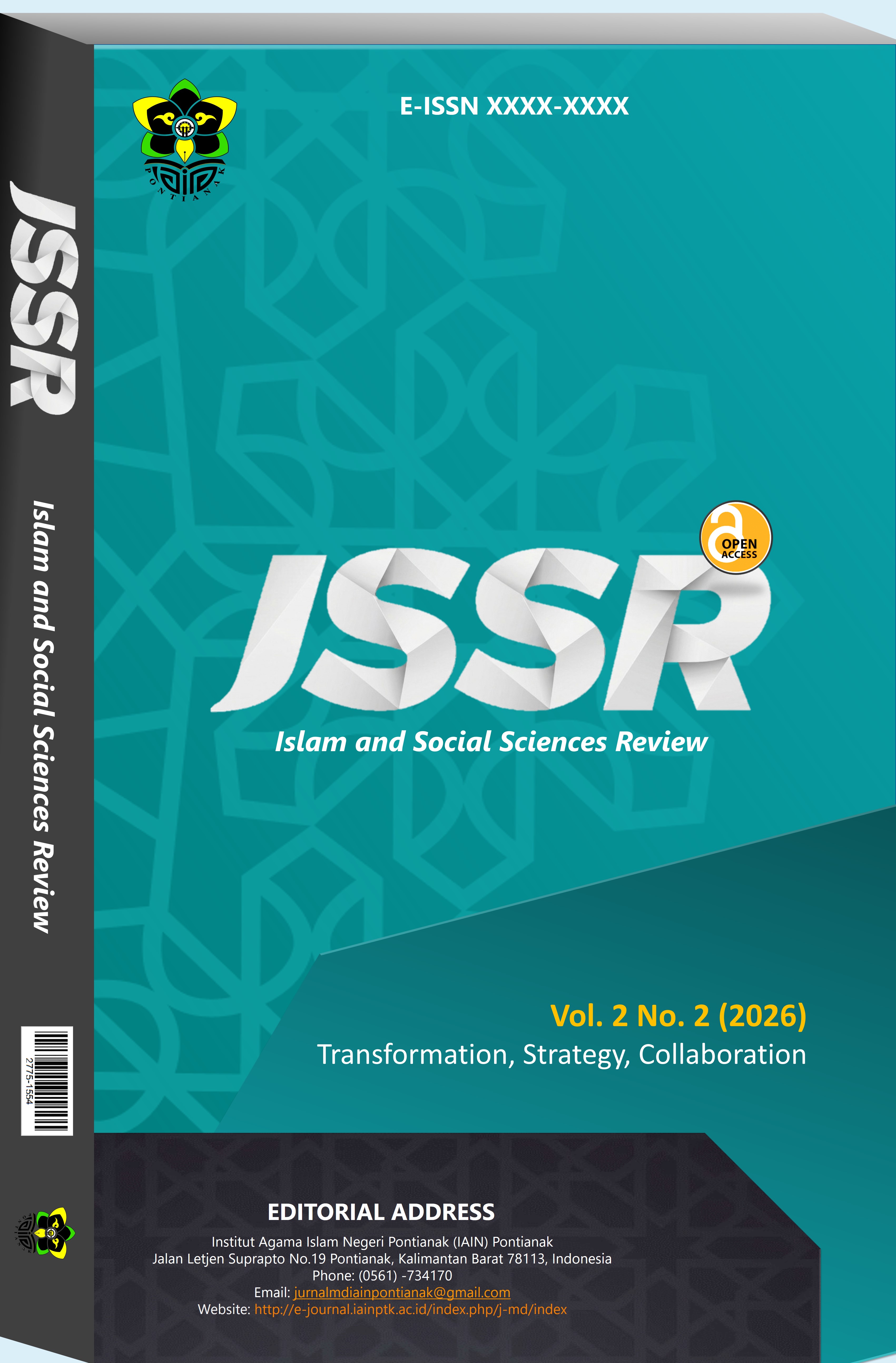
Islam and Social Science Review is an international, peer-reviewed, and open-access academic journal dedicated to advancing interdisciplinary scholarship at the intersection of Islamic studies and the social sciences. The journal provides a scholarly platform for rigorous theoretical, empirical, and methodological contributions that explore how Islamic values, institutions, and thought systems interact with contemporary social, political, economic, cultural, and developmental issues.

The journal welcomes original research articles, systematic reviews, and conceptual papers that employ robust scientific methodologies and demonstrate strong theoretical grounding. Priority is given to works that contribute to global academic discourse and offer comparative, cross-cultural, and policy-relevant insights.

Scope and Focus

Islamic Study

This section focuses on scholarly works grounded in Islamic sources and intellectual traditions. Its scope includes, but is not limited to:

  • The Qur’an and Hadith
  • Islamic jurisprudence (Fiqh), legal theory (Usul al-Fiqh), and both classical and contemporary Islamic law
  • Theology (Aqidah and Kalam) and Islamic philosophy
  • The history of Islamic civilization
  • Islamic ethics
  • The intellectual contributions and thought of Muslim scholars

Approaches employed in this section include normative, textual, and historical analyses rooted in the Islamic scholarly tradition.


Contemporary Social and Human Sciences

This section addresses social phenomena through contemporary scientific approaches. Its scope includes, but is not limited to:

  • Sociology, anthropology, and social studies
  • Political science and public policy
  • Economics, management, and accounting
  • Psychology, communication, and counseling
  • Gender studies, development studies, and globalization

Research methods typically involve empirical approaches, including qualitative, quantitative, and mixed-methods designs.


Open Access Policy

This journal provides immediate open access to its content on the principle that making research freely available to the public supports a greater global exchange of knowledge. All articles are published under a Creative Commons license, allowing unrestricted use, distribution, and reproduction in any medium, provided the original work is properly cited.

Peer Review Process

All submissions undergo a rigorous double-blind peer review process conducted by international experts in relevant fields. The editorial process is guided by principles of transparency, academic integrity, and publication ethics in accordance with COPE (Committee on Publication Ethics) standards.

Publication Ethics

The journal adheres strictly to international ethical publishing standards. Issues such as plagiarism, data fabrication, redundant publication, and unethical research practices are not tolerated. Authors, reviewers, and editors are expected to comply with the highest standards of academic integrity.

Copyright and Licensing

Authors retain copyright of their work while granting the journal the right of first publication. All articles are distributed under a Creative Commons Attribution License (CC BY), ensuring maximum dissemination and academic impact.

Archiving and Preservation

To ensure long-term digital preservation, all published content is archived through recognized systems such as LOCKSS and CLOCKSS, guaranteeing permanent access to scholarly content.

Indexing and Visibility

The journal is committed to achieving high international visibility and indexing in leading scholarly databases, including Scopus, Web of Science, DOAJ, and other reputable indexing services. Continuous quality improvement is prioritized to meet the standards of Q1-ranked international journals.

Sponsorship and Independence

The journal operates independently and does not accept influence from any political, ideological, or commercial entities in its editorial decisions. Any sponsorship or funding sources, if applicable, are transparently disclosed.

Privacy Statement

The journal is committed to protecting the privacy of authors, reviewers, and readers. Personal data collected during the submission and review process is used solely for editorial purposes and is not shared with third parties.