
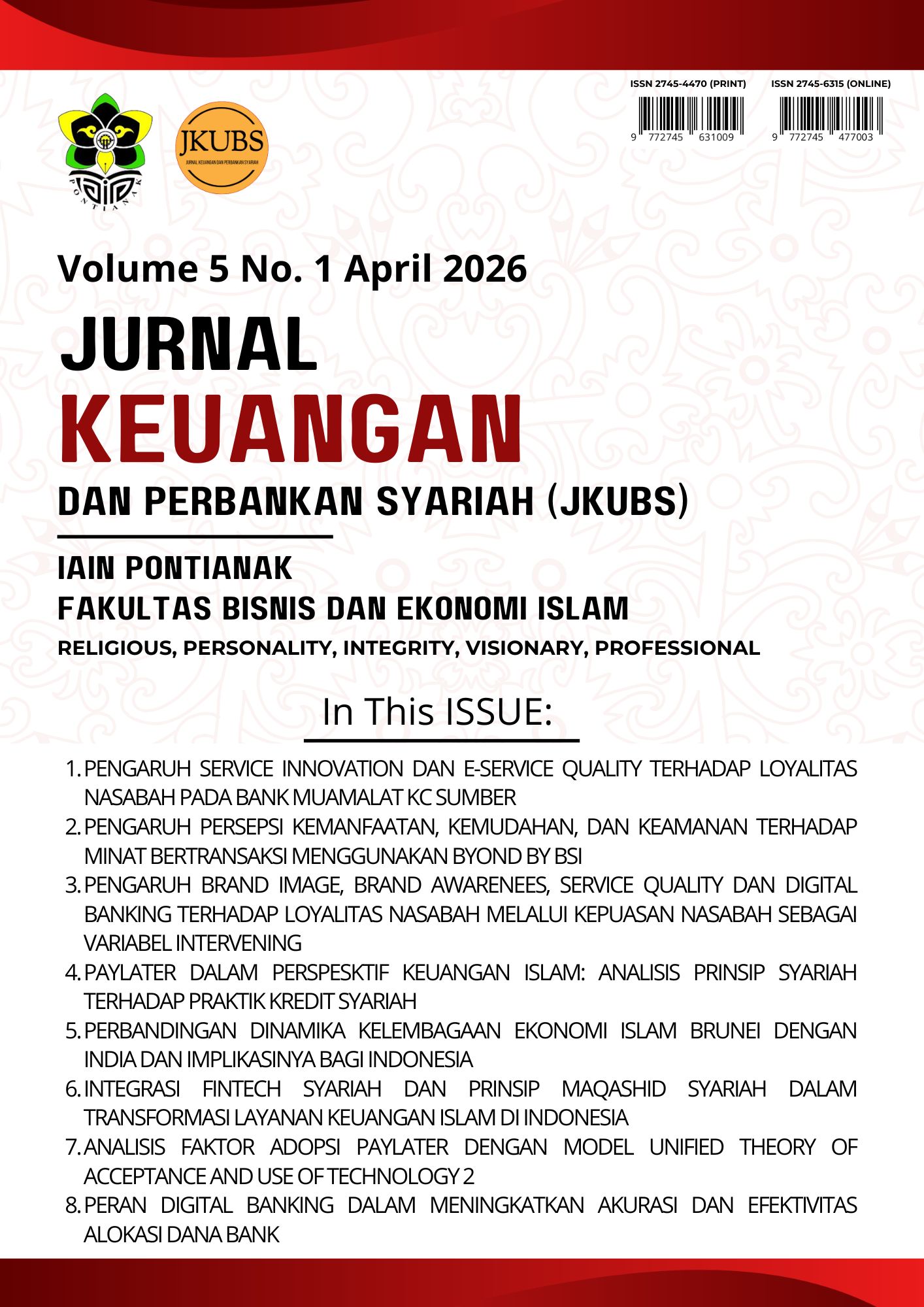
Paylater dalam Perspesktif Keuangan Islam: Analisis Prinsip Syariah terhadap Praktik Kredit Syariah
Paylater in the Perspective of Islamic Finance: An Analysis of Sharia Compliance in Digital Credit Practices
DOI:
https://doi.org/10.24260/jkubs.v5i1.5478Keywords:
Paylater, Sharia Principles, Digital CreditAbstract
Purpose: This study aims to evaluate how well Paylater service methods align with Islamic finance's sharia rules. The study focuses on how contracts are structured, how interest or other fees are applied, late fees, and how these factors affect the values of benefit and justice in digital credit transactions that are emerging in the fintech era.
Design/methodology/approach: This study employs a normative-descriptive research design and a qualitative methodology. Literature reviews on Islamic financial theories, Paylater procedures, fintech laws, and pertinent Sharia fatwas are the techniques employed. This method was selected in order to evaluate how well digital credit operations align with relevant Sharia rules and concepts.
Research Findings: The study's findings demonstrate that the majority of Paylater services continue to use traditional credit methods, which may involve aspects of injustice, gharar, and usury. Furthermore, the minimal restrictions and simplicity of usage of Paylater may promote excessive debt utilization and consumptive behavior, which would go against the Islamic banking principals of moderation and balance.
Contribution/Originality/Novelty: This study's significance and originality are found in its thorough examination of Paylater as a contemporary digital credit phenomenon from the standpoint of Islamic finance. In addition to evaluating the contract's legal features, this study emphasizes its ethical implications and how it affects customer behavior. It also provides suggestions for creating a Sharia-based Paylater model that upholds Sharia values by encouraging justice, openness, and consumer protection.
References
Almu’afi, M. I. (2024). PANDANGAN FIQH TERHADAP SISTEM PAYLATER DI MARKETPLACE DIGITAL. 2(2), 55–60.
Ascarya. (2015). Akad dan Produk Bank Syariah. Rajawali Pers.
Atmayani, I. T. (2025). Tinjauan Hukum Islam terhadap Skema Pembiayaan Digital Berbasis Kredit : Studi Kasus OVO PayLater. 1(1), 31–45.
Chrismastianto, I. A. W. (2017). Analisis swot implementasi teknologi finansial terhadap kualitas layanan perbankan di indonesia. 20(1), 133–144.
DSN-MUI. (2001). Fatwa DSN-MUI No. 19/DSN-MUI/IV/2001 tentang Al-Qardh.
Fadhillah, N. (2023). Prinsip-Prinsip Dasar Keuangan Islam. 9(1), 30–45.
Isnaeni, M., Cahnia, I., Nurazizah, I., & Shabah, M. A. A. (2023). Perspektif Hukum Islam tentang Akad Qardh dalam Pembayaran ( Paylater ) Jual-beli Online Aplikasi Marketplace Shopee. 1, 76–90.
Kholis, N., & Mu’allim, A. (2018). Transaksi dalam Ekonomi Islam. Quantum Madani.
Maulida, D. M. (2021). PANDANGAN EKONOMI ISLAM TERHADAP SIKAP KONSUMERISME AKIBAT METODE PEMBAYARAN TUNDA BAYAR ( PAYLATER ). 5(2), 131–144.
Mutiarawati, I., Dewantara, R., & Rachmat, S. N. (2024). The Law Responsibility of E-Commerce Organizers Regarding The Failure of Payment in PayLater System. Internasional Journal of Islamic Education, Research and Multiculturalism International Journal Islamic Education, Research and Multiculturalism (IJIERM), 528–546.
Novendra, B., & Aulianisa, S. S. (2020). KONSEP DAN PERBANDINGAN BUY NOW , PAY LATER DENGAN KREDIT PERBANKAN DI INDONESIA : Jurnal Rechts Vinding: Media Pembinaan Hukum Nasional, 183–201.
Prastiwi, I. E., & Fitria, T. N. (2021). Konsep Paylater Online Shopping dalam Pandangan Ekonomi Islam. 7(01), 425–432.
Rahmadhani, N., & Putra, B. J. (2025). ANALISIS PRINSIP-PRINSIP EKONOMI ISLAM DALAM PENGGUNA SHOPEEPAYLATER. 4(02), 56–62.
Salim, M., Adhnan.S, S., & Zazili, A. (2025). Analisis Perlindungan Hukum Konsumen pada Fitur Paylater di Aplikasi Gojek Berdasarkan Peraturan Otoritas Jasa Keuangan Nomor 77/POJK.01/2016. Justica Sains: Jurnal Ilmu Hukum, 10(02), 580–597.
Sugiyono. (2018). Metode Penelitian Kuantitatif, Kualitatif dan R&D. CV. Alfabeta.
Sukma, M., Wijaya, A., & Sofyan, S. (2023). Penyelesaian sengketa perjanjian pembiayaan layanan kredit digital (PayLater) akibat wanprestasi. Shautuna: Jurnal Ilmiah Mahasiswa Perbandingan Mazhab, 116–132.
Downloads
Published
Issue
Section
License
Copyright (c) 2026 Herlinda Oktaviani, Abdul Ghofar Saifudin

This work is licensed under a Creative Commons Attribution-NonCommercial 4.0 International License.