Peer Review Process
The editor-in-chief conducts an initial assessment to determine whether a submitted manuscript aligns with the aims and scope of the Journal of Islamic Law. If deemed suitable, the editor-in-chief assigns the manuscript to the managing editor for further processing, including verification of compliance with the journal’s maximum similarity threshold.
Manuscripts that pass the initial screening are assigned to an editor for further handling. Each manuscript is evaluated by at least two independent reviewers invited by the editor. All submitted manuscripts undergo a double-blind peer review process, in which the identities of both authors and reviewers are concealed to ensure objectivity, academic rigor, and ethical integrity. Only manuscripts that receive favorable evaluations from qualified experts are considered for publication.
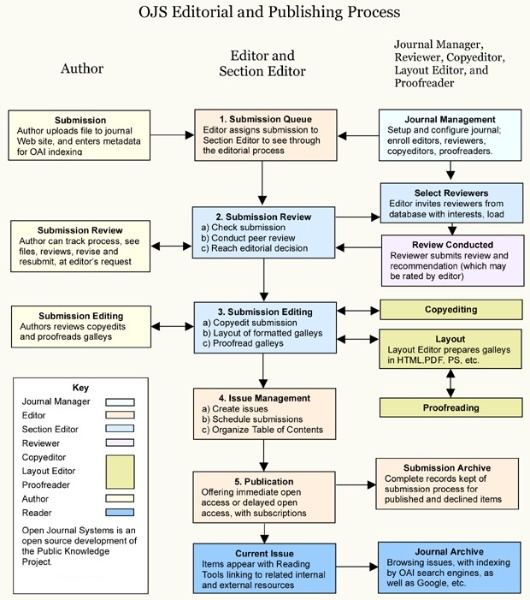
The Journal of Islamic Law upholds rigorous double-blind peer review standards while maintaining an efficient and transparent editorial workflow. The primary stages of the peer review process are outlined below.
Stages of the Peer Review Process
The journal employs a two-stage review process. Following a technical and administrative check, each submission undergoes an initial editorial evaluation to assess its relevance, originality, and suitability. Manuscripts deemed appropriate are then assigned to an editor for further review and decision-making.
If a manuscript meets the journal’s scope and editorial criteria, the editor identifies and contacts at least two reviewers recognized as experts in the relevant field. As peer review is a voluntary academic service, the process may take time; however, editors actively monitor progress to ensure timely reviews. During this stage, the manuscript status is marked as “Under Review.”
Once the minimum number of expert reviews has been received, the manuscript status is updated to “Required Reviews Complete.” Authors are then notified and requested to revise the manuscript in accordance with the reviewers’ comments and recommendations.
After resubmission, the editor evaluates whether the revisions adequately address the reviewers’ feedback. If necessary, the manuscript may be returned to the author for further revision or, where appropriate, rejected if it does not meet the journal’s academic standards or scope.
Peer Review of Referred Papers
For manuscripts referred from supporting journals, editors may decide to accept, reject, or request revisions based on existing reviews and editorial assessments. Additional external reviews may be sought where necessary, and authors will be informed accordingly.
Summary of the Review Workflow
- Manuscript submission by the author.
- Technical and editorial screening by the editor.
- Editorial decisions to proceed, reject, or review; all manuscripts undergo a plagiarism check using Turnitin prior to peer review.
- Double-blind peer review by at least two reviewers.
- Editorial decision (acceptance, revision, or rejection) communicated to the author.
- Manuscript revision by the author, where required.
- Resubmission and evaluation of the revised manuscript.
- Final decision by the editor.
- Copyediting, galley proof preparation, and publication.
Steps 1 to 5 constitute one complete round of peer review. Based on reviewers’ reports, the editor may reach one of the following decisions:
- Accept Submission: The manuscript meets the journal’s academic standards.
- Revisions Required: The manuscript requires revision before reconsideration.
- Resubmit for Review: Substantial revisions are required prior to further review.
- Resubmit Elsewhere: The manuscript is outside the journal’s scope.
- Decline Submission: The manuscript is rejected and will not be reconsidered.
Decisions regarding the acceptance, revision, or rejection of manuscripts are made by the editors based on reviewers’ comments and recommendations. In certain cases, if necessary, a manuscript may be sent to an additional reviewer for a second round of review before a final decision is reached. The publication of accepted manuscripts, including their order of publication, is determined by the editor-in-chief, who considers the dates of acceptance and geographical distribution. On average, the entire process from submission to publication takes approximately 12 weeks.
In accordance with publication ethics, all manuscripts under review are treated as confidential until publication.